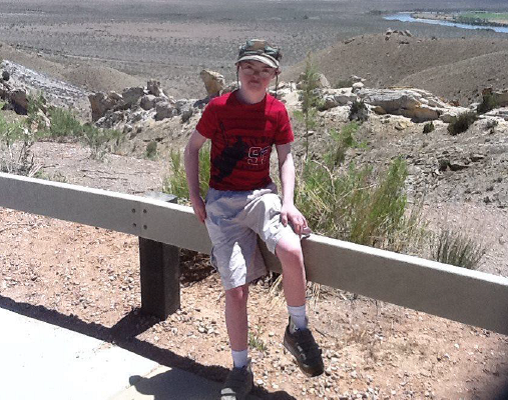
This blog is about living with a young adult with Down Syndrome. My goal is to discuss teen and early adult issues candidly.
Showing posts with label cleft lip and palate. Show all posts
Thursday, December 24, 2015
Merry Christmas
"He had no beauty or majesty to attract us to him, nothing in his appearance that we should desire him."
Isaiah 53:2
It goes, perhaps, without saying that the special needs community (persons with special needs, their families, friends, and service providers) is as diverse as the rest of the world, and as such, the views on how to include, what to include, where to include, etc are as varied as the number of people in the community.
But it is not just our political, cultural, and religious backgrounds that cause us to differ in our approaches to inclusion, it also has a lot to do with what sorts of special needs we are dealing with.
My son Ben has Down Syndrome plus. (My nomenclature, offered without apology). His cleft lip and palate, severe heard defect along with various co-morbidities that accompany such physical diagnoses, affect his abilities to hear and to speak. His speech and hearing have over time isolated him enough from even the typical peer interactions that more healthy youths with Down syndrome are able to enjoy, that he has acquired the additional label of Obsessive Compulsive Disorder.
Now, all this to explain where I fall on the special needs spectrum in terms of how my approach to disabilities came about.
I do not have one of those "YOU CAN DO IT IN SPITE OF DOWN's" sons. My son will not lose 60 lbs and suddenly become a handsome body builder with Down's. He will not, through my "Asian mom-style" teaching suddenly become the only kid with Down's in his high school to pass a non-modified consumer math class. Nor will he take a small speaking part in the school play to "prove" that he is really just like the rest of the kids in high school.
It may feel good and natural for parents with extraordinarily talented Trisomy 21 kids to have their daughter with Down's be a cheerleader, or have a son sing the national anthem at a big sports event. I am not discounting the pleasure of such an exhibit (for the disabled person, his or her family, and his or her friends). Some may even find such feats inspiring, and if so... why not enjoy the inspiration?
For me, however, and perhaps, also, for others who are dealing with a more severe and complicated battery of challenges, this 'just like us' mentality, which is demonstrated by getting one exceptional person with Down's to do or act the way typical peers act, is not only discouraging, it is out of reach.
Not only is it out of reach, the 'just like us' mentality can also, without meaning to, devalue persons with disabilities who will never achieve such a 'just like us' moment. The humanity of a person with special needs cannot/should not be measured by (parent, school, services)'s therapeutic abilities to support a disabled person to perform at near-typical levels in one isolated splinter skill. Not only does such an achievement not 'typicalize' the person with disabilities, over-valuing narrow therapeutic foci runs the danger of only valuing persons with disabilities when they overcome a deficit. It also runs the danger of devaluing other persons with the same disabilities who cannot attain that one splinter skill at the same levels of performance.
My humanity cannot, indeed should not, be evaluated based on the skills sets I have been fortunate enough to acquire, given my physical, emotional, intellectual, and spiritual gifts in life. Any one of my gifts can be 'snuffed' out in a moment of misfortune, no matter how gifted I might have been at birth and on.
My humanity, your humanity, the humanity of all persons, including those who -- to a greater degree than most of us-- struggle with physical, intellectual, developmental, and emotional challenges lie in their being born human. Our respect for the value of all human lives must begin and end there, regardless of whether they can walk or talk, regardless of whether they can regulate their emotions, count to 100, or feed themselves.
Life matters, and yes, we all matter, but some of us are more at risk for not mattering, namely those who have been mistreated, misunderstood, ignored, and devalued.
He came to us as a little child, humble and helpless. There was 'no room' for him at the Inn. He was not valued, welcomed, or noticed.... because ....
"He had no beauty or majesty to attract us to him, nothing in his appearance that we should desire him."
Thursday, July 30, 2015
Be kind, for everyone you meet is fighting a hard battle
It is estimated that up to 50% of persons with Down syndrome have acquired some sort of depression, anxiety, or some other mental disorders by which they cope with the loneliness that often comes with their intellectual disabilities. (Mental Health Issues and Down Syndrome, National Down Syndrome Society)
It is also estimated that during a 12 month period, as much as 10 % and perhaps all the way up to 26% of the population of the United States likewise suffer mentally in some fashion. (Understanding the Root Cause of Anxiety and Depression, Animals in Research and Teaching, University of Wisconsin ) That should give us pause to think about the people that cross our paths. Note in particular that ages 18-25 are the most prone. I often wonder, in my college classes, how many of the precious men and women who struggle through some of my gen ed classes are already on overload.
Ben is 18. He is in that category, and he has suffered significantly more with finding his purpose, identity and sense of belonging, since growing up and watching his siblings move out. (See my blog about Empty Chairs and Empty Tables).
Most specialists we consulted this year, as his mental health deteriorated, thought Ben was autistic -- certainly he had the circular, self-stim, self-talk, rigid approach to life, transitions, and change that one would expect from an autistic individual. All evals placed him on the autistic spectrum, except the last eval -- the augmentative speech evaluation.
The only psychologist in the state who specializes in Down Syndrome (and thank God for her!) established after 6 months of WAY too many appointments that Ben has OCD, obsessive compulsive disorder.
Because Ben has Down syndrome and because Down syndrome comes with its own peculiar coping mechanisms, OCD in Ben walks, talks, and quacks like autism. He obsesses over numbers, calendars, getting out the door on time, birthdays. Anything where he thinks he knows how it ought to go frustrates him when it's changed. Today when I bought pair of running shoes at the store, he was upset all the way out the door because the lid didn't properly fit on the shoe box (I had thrown the shoes in rather sloppily). We had to stop and readjust, and all became happy face :).
[Incidentally, the joke at my work-- as well as from my children-- has often been that I am/have OCD because of my meticulous labeling of my files, my orderly desk, my tendency to work ahead, and my never leaving my office or my lab without straightening it up first. I WILL NEVER consent to that label again, after witnessing how truly dysfunctional and debilitating OCD can be. It's a joke, I know, but those of us who are anal and get a lot done may be obsessive, but it's a functional obsessive -- not a compulsion.]
Ben is not autistic. Ben is social, he wants to connect, in fact, he loves people, but his limited expressive speech skills trap most of his thoughts inside his head. When in conversation, or when people ask him questions and expect him to reciprocate, he gets incredibly anxious trying to get the words out of his mouth (remember cleft lip and palate and an unusually large Down's tongue!) because most of the time the conversation has moved on and he never got one word in.
This year in the spring, I was called to his Sunday School which consists of a cool group of 6th grade kids. Suddenly in the middle of the class he just laid his head down on the table and wept because he could not keep up with the conversation.
Ben's coping mechanisms are self-talk and imaginary conversations in "Ben language" which is largely unintelligible to the general public. He has a stuffed bear named Ben who is a best friend and he processes stuff with Ben the bear. Ben is patient (Ben my son) but he does sometimes melt down. When his every attempt to talk results in nobody getting what he meant, he can go on overload like a circuit board. The switch just flips. In fact, when *I* misunderstand him, he gets down right angry. "NO, YOU'RE WRONG," he yells. But usually I cannot make amends right then and there because he needs time to process his anxious body down to its more normal state.
Ben's normal mode is to have chronic anxiety when out with people. After a misunderstanding -- if it is bad enough -- he will collapse quietly and withdraw to a safe spot, which is a good strategy. The problem arises mostly when folks insist that he stay and deal with the situation. That is when he may make a scene. The scene is simply signaling for people to back off and let him recover his energies as only he knows how.
I shared Ben's recent diagnosis with a wise Ukrainian lady from our church, and her comment was this --- that for every Ben out there, struggling to connect socially as he grows older, there are 10, perhaps 50 kids that walk and quack "normally" (whatever that means) who suffer the same degrees of social anxiety. Some of those kids grow up to suffer as adults too. It just breaks my heart, and it reminds me to be kind to kids, even kids who are difficult to love!!
Kids will act out and let you know they suffer. Adults do not. They hide, and Ben who is now an adult hides with them. He hides with movies, he hides by obsessively writing calendars that go all the way through 2019. On those calendars he writes birthday after birthday, his own, his mom's, his dad's, his brothers', his sister's, his teachers', his class mates' -- anyone he can think of -- and if he does not know your particular birthday, he might just make one up for you and give you one of his hand made cards anyways.
Birthdays are happy, they are safe. Everyone is accommodating on birthdays. They -- along with Christmas and Pascha (Orthodox Easter) -- are the safest, coziest, most loving days he can think of. So he creates them daily by writing calendars, imagining birthdays for his stuffed animals, and writing scores and scores and scores of birthday notes to all family members and friends.
Or as in this case, mimicking his sister's graduation by writing his own graduation invitations:
Ben goes through an amazing amount of paper during one afternoon when left to himself. He also plays Yatzee or does iPad bowling while meticulously recording each score for each roll. It is a world he can control, he feels safe, and he feels productive (even if he really isn't). But this is OK. It's one way for him to cope, and cope we all must.
I derail his circular behavior when it has gone on long enough, or when -- as is not infrequently the case -- it interferes with his getting ready for school, going to bed, or with his general self care.
For the school year, Ben and I operate with schedules. They do on the one hand feed his OCD --- but on the other hand they add to his functionality... i.e. he is productive when following them, so unlike his other dysfunctions (like consulting 4 calendars to make sure tomorrow is really Sunday, and really the 25th) which slow him down and get him stuck in circles, these PEC schedules help him get through his day.
[More sophisticated, perhaps, but we are all socially anxious at some level. We don't stutter perhaps. But we have encounters with people, and then we go home and obsess: "I shouldn't have told him that. I was too transparent. Or I dominated the conversation and I bored him. . Or what I said about my daughter sounded like I was judging the way he raised his own kids. Or when I said that I didn't care about that one issue, I didn't mean to come across callous. Or I never addressed what he said about this issue. He probably thinks I don't care.... etc."]
The good news is that knowing Ben has OCD, I am beginning to see his actions in light of that diagnosis, AND I am going to behavior therapy (me more than Ben it seems!!) to be equipped with strategies for helping Ben weather his days with less storms on the horizon. Not all days are good, but more days are good than used to be.
There is nothing so sacred we cannot joke about it, however. :)
So in the case of Ben, when you meet him, make sure to recognize him, perhaps compliment him on being such a snazzy dresser,
but don't converse in a way that puts pressure on him to recall answers, unless you have paper and pen and are willing to stand there and exchange notes -- or unless you have a lot of time to spare, engage him in a game of Sorry, Monopoly Jr, Uno, Yahtzee, Memory, or Jenga:
Or if you decide to sit down and watch Phantom of the Opera or Les Mis with him. :) When dealing with him, and with people who are depressed, and perhaps with all of us --- the more time you can generously invest in him, the more responsive, he will be.
There is hope,when we remember to be kind, and remember that most people's battles are ones we cannot know of or even see.
“To love another person is to see the face of God.”
― Victor Hugo, Les Misérables
Saturday, May 2, 2015
Coping with Special Needs - One mom's journey
What absolutely broadsided me
after becoming a special needs mom was dealing with other special needs parents.
Doctors and nurses kindly connected me with a Down syndrome support group, and
I went a time or two and fizzled.
Support Groups
No, I am not against support
groups, and I have been supported by many wonderful people over my son’s 18
years, but I would say that there is no one way of dealing with this, and I
would add that our differences in dealing with these stresses majorly divide
parents of special needs, who to the rest of the world SEEM to have so much in common.
I was introduced to the Down syndrome community in Kalamazoo, Michigan first. My son has Down’s but that was the least of
my problems. He also had a severe heart defect, cleft lip and palate, digestive
issues, respiratory issues, etc.
My real first support group consisted of parents --not with children with Down's-- but with severely ill children who might not make it. Most kids with Down’s have one or two medical issues that gets repaired, after which junior grows up on a Down’s growth chart, with a Down’s developmental schedule, he reads, he talks, he moves about, and he generally turns into a congenial, fairly easy-going fun kid. My son was near-comatose the first year, and then screamed the second. Theses parents had concerns about sitting and walking, I had concerns about survival.
Ben spent four years being so
critically ill, that he seemed like a minor miracle every time he turned the
corner on the latest threat (bacterial, cardiac, pulmonary) and came through
strong. He is largely unintelligible
today (though we do have communication devices and paper and pencil to
clarify), and he shows traits of inflexible, rote, autistic-like behaviors,
which result in quiet, inward-turning melt downs when his world becomes
over-stimulating or too unpredictable for him. He has Down's, yes, but that is not the biggest issues in helping him cope with life productively.
Alone
But, even when I find, as I have,
communities with kids who are in-one-aspect like Ben, we each walk this path
alone. Our children do, and we do. But alone is OK. Alone can strengthen you.
Note – I am not knocking support
groups or friends. I don’t know what I would do without folks who can relate to
a particular struggle with a Medicaid refusal on needed equipment. What I am
saying is that special needs and how we deal with the challenges is fundamentally related
to our basic coping mechanisms, many of which we bring with us from our
childhood homes.
For example, when I was pregnant
with Ben, I was determined not to abort, though we knew from 17 weeks that he
had significant heart issues, clefts, and Down’s. I went to appointments at
University of Michigan Hospitals, and time and again, a doctor would encourage
me to consider abortion. I was mildly annoyed and found the
suggestions inappropriate, but I have always been a somewhat independent person
(I moved 7,000 miles from my family at age 22).
When I would mention these encounters to friends, my friends would have tears well up in their eyes at the thought that a doctor could suggest that I should destroy Ben. And I thought, .. huh?? This is MY kid, and you are crying... and I am not??
Call me Mr. Spock … but the idea of destroying Ben was a non-issue, since the ‘choice’ to do so was entirely in my power and I knew I would not allow that. I don't get emotionally upset at potentialities. Good grief, he was so sick, and there were so many unknowns. If I had mentally chased every bunny trail of what could have gone wrong, I would be neurotic by now.
Venting
Another event I remember involved
a short-term friend C., whom I met when Ben had his second heart surgery and
managed to stay in the hospital for almost four weeks due to
post-operative complications.
C.’s son was in the same intensive care unit as Ben, and when C.’s son’s recovery was complicated by pneumos, she freaked out and spit nails at doctors and nurses right and left right there in the cardio-thoracic ICU. She was acting out of raw fear – her fear that her son would not recover. She was fit to be tied, and the nurse exited inconspicuously while nodding to me that this was my friend and I would be the best person to talk her down to size.
Nothing wrong with C's reaction, and she was a chill gal most of the time, and she needed to let it out. That was not me-- at least not in public. I was raised to be a polite inconspicuous Scandinavian who tries hard not to inconvenience others. At times when my son's life was threatened, I'd either move into action (if there were something I could do) or I would internalize it, or try to process it by discussing the details with the cardiologist. Somehow understanding the scientific details engaged me in intellectual pursuits which somehow dulled my fears and gave me an illusion of control.
Then there are the long-term
threats, like the realities of what my kid will actually be able to do or not able to do in life. Parents of
special needs have a variety of coping mechanisms there too.
When your kid is really really
sick, like mine was, you tend adapt what I call the total-parent-child-bond, where this kiddo is
the only thing that matters to you, and caring for him trumps anything else you
do.
This backfires....
... when he gets well (or if he dies) you have no life left, and no friends either – doctors, nurses, surgeons, nutritionists, respiratory therapists, the medical supply delivery truck driver, and your friendly Walgreen's pharmacist were your only friends -- all paid friends. – I kid you not, when we moved from Michigan to Colorado, we got a SIGNED CARD from everyone on staff at our local pharmacy at Walgreen's in Portage, Michigan to tell us good bye. We had teary eyed goodbyes and hugs with pediatrics and cardiology, especially.
I was in the
total-parent-child-bond for about six years because Ben was so sick, and I think
it is a dangerous place to be because it is not-sustainable. Your kid will get
better, or your kid may die, and you will come out on the other side, having missed
happenings in the rest of the world -- you forgot Aunt Ethel's birthday ten years in a row and she is miffed. you don't see your neighbors, your church doesn't remember your family any more, and the people you thought WOULD be there for you when you are finally out of the medical tunnel have gotten new friends and have busy lives that have moved on.
Medical Friends
As examples of my sheltered existence for those six years, I have no recollections of the second
Clinton presidency – what he did or did not do, whether the economy was good or
bad, what happened in the rest of the world during those years. That pretty much translates to Kosovo and the
Balkans did not happen in my little
universe of medics, oxygen tanks, G-tubes, and feeding pumps.
I have heard that some moms get so dependent on Medical-ville in this stage that when their child is about to get better they develop Munchhausen-by-proxy
syndrome and actually physically MAKE their kid ill just so they can come back to the hospital... so they can stay in the world they feel
loved in – kinda like a recently released convict who commits a crime so he can
go back to prison because he does not know how to function in the real world.
I was not like that. I was relieved when the pressure let up and every morning was not a game of dice where the options were ER, doctor's office, inpatient, surgery, or stay home and tube feed.
I always the one who did everything for Ben in the early years. -- Not healthy -- I saw other parents of special needs children who were seriously ill, who took turns in the hospital, who shared the care of the child, who took turns being up at night, and I think that is a healthier mode than what I ended up in. When my son was three, I was offered the chance to go to a silent retreat, and I realized that nobody else in my household was capable of taking care of Ben, so in effect I could not leave without training folks, getting nursing support, etc. And I did make that change, untied myself a bit from that leash, and left for 2 glorious days of simple foods, quiet evenings with candle light, the woods, a few girlfriends and some much needed rest.
Blame
One of the more toxic
coping mechanism for us parents of chronically ill children is: ‘whose fault is this?’.
I had friends who had a great need
to blame someone. Not that anyone blamed anyone for a kid being born with a specific
syndrome, but when something went wrong with that kid, when a doctor failed to notice a condition,
or to take it seriously soon enough, all the negative energy pent up (from the frustration of having a child with a chromosomal abnormality and all the
side effects ensuing from such a condition) could then be targeted at that one
physician who made that one mistake on that one day.
It’s kinda
akin to kicking the dog after you have had a bad day at work. He is the next thing that crosses your path,
you have had it up to here and then some, and he just happens to be in the
wrong place at the wrong time. I think we all do that, at times, and hopefully
we ask forgiveness and restore relationships, but the danger comes in when that
becomes a life obsession – always trying to find someone to blame when
something goes terribly wrong.
Anger
I have met many parents of kids
with special needs who at the root are very angry people. They are angry at
school, at all that school should be doing for their kiddo, but isn't. They are angry at doctors who didn't catch certain symptoms, or who chose the wrong
treatment. A good example of this is the crowd of parents who band together to
blame their child’s autism on the MMR vaccine – a claim that cannot be
substantiated scientifically, and in fact, one that has been refuted thoroughly
by the medical community (http://www.immunize.org/catg.d/p4026.pdf)
. They feel angry. They are dealing with what they do not want to deal with,
and they are profoundly disappointed in the issues that their child has. Life
has thrown a curved ball, and they cope by finding someone to blame, someone
outside the family, and they unleash their anger by joining the anti-vaccine
community and spreading its message.
Not to elevate myself beyond the
reach of anger. I have had many angry moments, moments where I felt trapped by
having to care for this medically complicated person. I gave up a career in
nuclear physics research, I was much removed (for a season) from my three older
kids because I had to take care of Ben, and now that Ben is an adult, there are
still times where I fear the future in terms of how I am going to manage to
work and have Ben in adequate care that I can spend my 40-50 hours per week on
my job. When things go ‘wrong’… like
chromosomes divide incorrectly and a child is born with a ‘syndrome’, there are
a host of feelings to deal with: anger, fear, frustration are the chief ones,
and we parents of these kids are changed forever as we deal with those emotions
through the rest of our lives and through the rest of our children’s lives.
Many of my friends have become
advocates for special needs and sit on councils and in committees, or get jobs
in the special needs care industry. They know every law, everything
their kiddo is entitled to and they are super resource centers for new parents
and ignorant parents like myself.
Breaking Free
When Ben “finally” got better—somewhere
around 2003 when he turned seven, we happened to move to Colorado. I saw this
as my big break. I wanted out of Medical-ville SO BADLY. And since I was
leaving behind Dr. Page, Dr. Loker, Teresa the audiologist, Jan our nutritionist,
so say nothing of Dr. Sommers, and the whole cleft team at C. S. Motts. Since I
was going to a place where nurses would not fight over who got Ben, to a place
where the receptionist in cardiology would not beam at me and discuss knitting
with me when I walked in, I decided to redefine my life.
In Colorado we put Ben in school,
and I started writing books, getting more involved with Church, and amazingly
Ben’s health was super (for the most part, apart from that once a year
pneumonia and that annual surgery or two). – I actually became SO IGNORANT of
special needs issues as I focused on the classics, started knitting socks, and
reading the Aeneid in Latin with my older kids, that when Ben turned 16 I found
out that I had missed – by two years—the time to sign him up on the long wait
list for adult long term Medicaid.
HAH!!
Ignorance is not always bliss.
I did not join another support
group till Fall 2014, just in time to get on board with Ben’s guardianship,
etc. which I have spent many other blog posts outlining. Neglect, perhaps. I
needed a break. And in the meantime, I have a job now, a life, a church,
friends, and I also have a corner of my life which is dedicated to special
needs. –
My life is more balanced now.
Wednesday, January 1, 2014
Subscribe to:
Posts (Atom)